

LAURENT FERRIER
Our story
A long term vision
As a third-generation watchmaker, Laurent Ferrier has always believed in perpetuating the exceptional nature of Swiss horology. A hallmark of each LAURENT FERRIER creation is the harmony he manages to achieve between pure, balanced design inspired by centuries of history and technically avant-garde movements.
The idea was to design classical and timeless timepieces, assembled by hand with high-quality materials. Laurent Ferrier had carte blanche, so he seized this opportunity in 2009, at the age of 63.
The very year of the official launch in 2010, LAURENT FERRIER won the award of best men’s watch at the Grand Prix de d’Horlogerie de Genève for the Classic Tourbillon Double Hairspring – it’s very first creation.
Since then, LAURENT FERRIER keeps on demonstrating with integrity its ability to create timeless exceptional timepieces devoid of any superfluous detail, with a pure aesthetic. Time should once again have no hold over his collection that displays an authentic sense of detail.
Today, Laurent Ferrier and his son, Christian Ferrier, work together at the Creative Department, while François Servanin remains the President

LAURENT FERRIER
REFINED CLASSICISM, PURE MECHANICAL PERFECTION
"I nurtured a dream of making watches that represented my horological values: simplicity, precision, and pure, uncluttered beauty"
Laurent Ferrier
Laurent Ferrier was born on 19th December 1946 in Geneva, Switzerland. Laurent Ferrier grew up in a watchmaking environment as both his parents and grandparents were watchmakers. His father used to work on high-end complications in a shop that was located right below the family’s apartment; thus, at this time, Laurent Ferrier already had the chance to access exceptional timepieces.
Laurent Ferrier studied in the École d’Horlogerie de Genève and graduated in 1968. After completing his watchmaking studies, he joined one of the most important watch brand in Geneva, with experiences ranging from prototypist watchmaker to being in charge of development creation to the “habillage” - the exterior parts of the watch.
In the early days of his professional life, Laurent Ferrier enjoyed watchmaking but remained really passionate about motor racing. In 1968, at the age of 22, Laurent Ferrier decided to fully dedicate his time to his motor racing passion. He started selling automotive components, with the idea of entering progressively the automotive world and, why not, participating to some motor races.
In 1974, the famous Genevan watchmaking brand created a Technical Department and offered Laurent Ferrier to come back. At the age of 28, he went back to work for the famous Manufacture. Later, he became responsible of the Creation Department, while the company was located Rue du Rhône, the emblematic place of luxury and watchmaking in Geneva.
He worked there for 37 years. Among many other things, he learned there that everything is a matter of balance and harmony.
François Servanin
Founder & President
In car racing, as in our watchmaking business, we never ask ourselves many questions, we just move forward!

François Servanin
Born near Lyon, into a family of hauliers since 1875, it was only natural that at the age of 21, François Servanin joined his brother at the head of Transports Servanin.
Passionate about trucks, he became a Mercedes, trucks and coaches dealer for the Rhône department in 1969. After a great success, he decides in 1976 to tackle the car market and takes over a Mercedes car dealership in Lyon before becoming a Porsche dealer in 1978. At the same time, he took over the BMW Zol Auto dealership in Paris which became the first dealership of the brand in France.
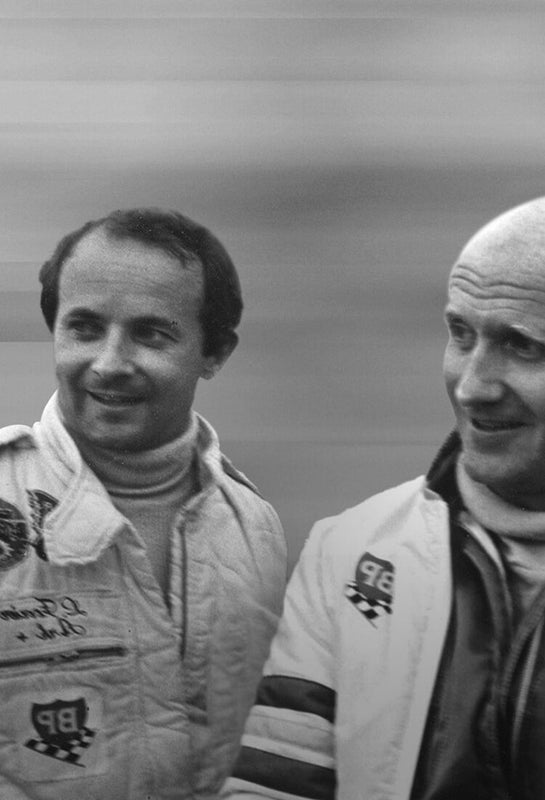
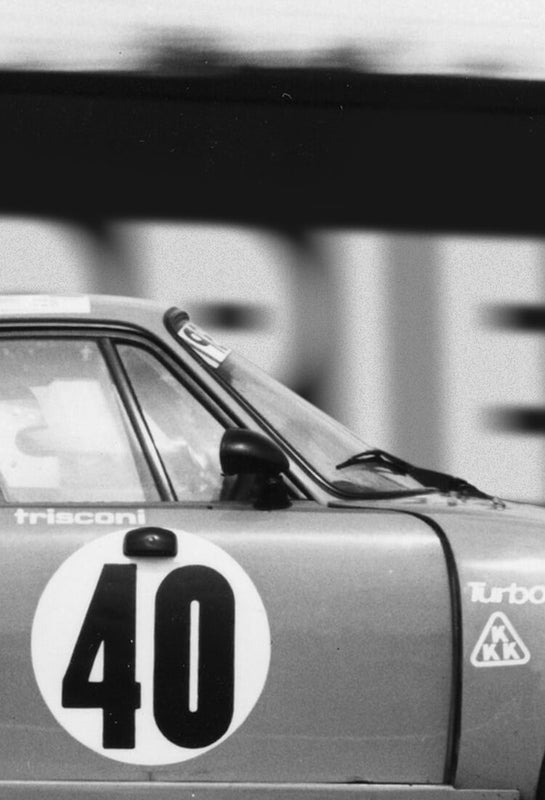
1974 to 1985 is a period during which he regularly swapped his raincoat and briefcase for a racing suit. He participated 12 times in the 24 hours of Le Mans race and in many races on the biggest tracks of Europe. In 1974, it is his first participation in the 24h of Le Mans, he teams up with Jimmy Mieusset, European champion. In 1979, with his team composed of Laurent Ferrier and François Trisconi, they are positioned 3rd overall at the wheel of the Porsche 935 T N°40 Kremer Racing. In 1982, he finished 5th overall with René Metge in the N°78 Cooke Racing Porsche 935 K3.
In 1984, he embarked on an industrial adventure by taking over the Cournil company and creating the AUVERLAND brand of off-road vehicles. He develops the military market and the PVP (Small Protected Vehicle) which will equip the French Army. He creates the models SCII, A2, A3 and A5, electric car.
In 2005, he teamed up to buy the Panhard brand from the Peugeot company. The company then becomes Panhard General Defense. In 2009, he sold the company to Renault Trucks to devote himself to his new project: LAURENT FERRIER.

Motor racing
A keen motor-racing enthusiast, Laurent Ferrier has an undying love for roaring engines and gleaming bodywork. In the 1970s, Laurent Ferrier participated in some of the most prestigious races of the day, including the legendary Le Mans 24 Hours race. He raced seven times at the Le Mans 24 Hours race, taking first place in the 2-litre prototype category in 1978.
Within the motor-racing circles, he became acquainted with François Servanin, an industrialist and racing driver himself. Their shared passion for mechanics and speed cemented their friendship, and in 1979 they came third in the overall rankings of the Le Mans 24 Hours at the wheel of a Porsche 935T. A performance even more remarkable in that their competitors were professional drivers! Laurent Ferrier and François Servanin both dreamed to create one day their own independent watchmaking brand.
Decades later, François offered his friend Laurent this once in a lifetime opportunity, developing a timepiece from scratch and creating the LAURENT FERRIER brand. Only three years before retiring from a greatly reknowed brand, Laurent Ferrier took up the challenge to create his own timepiece entirely.
Recognition
"Best Men’s Watch"
GPHG
Classic Tourbillon Double-Spiral
First time such a young company was honoured for a first creation. This prestigious distinction opened up promising prospects and propelled us firmly into watchmaking’s big league.
“Horological Revelation”
GPHG
Square Micro-Rotor
This award crystallized all our efforts over 5 years and is a strong motivation to commit further to excellence and creativity, our all time main drivers.
"Best Men’s Complication"
GPHG
Ecole Annual Calendar
This new timepiece was developed with the aim of ensuring extremely smooth handling, while also ensuring visual balance, readability and performance in all circumstances – all values dear to LAURENT FERRIER.